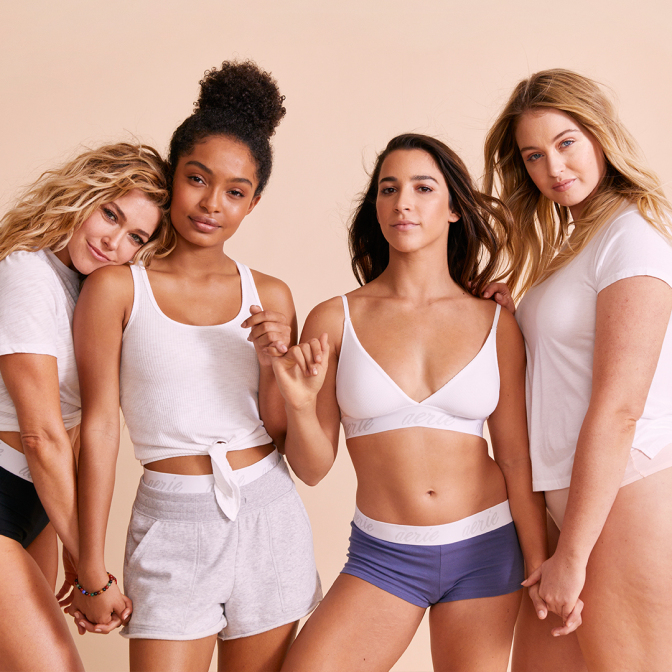
Sustainability is important to our customers and the world. Our products are made to feel good inside and out.
AEO Gives Back With Better World Community Day
On May 10, AEO celebrated its annual Better World Community Day. Associates spent the day in their communities giving back through projects and activities. Associates volunteered their time around the globe, including offices in Pittsburgh, New York, San Francisco, our Distribution Centers in Hazleton, Ottawa, and Mississauga, and our international offices in Mexico and Hong Kong.
Pittsburgh associates volunteered at more than 20 non-profits, including: Allegheny Traditional Academy and Family House, Literacy Pittsburgh, the Audubon Society, Mars Home for Youth, Global Links, and Carnegie Library.
New York associates spent the day making meals for seniors at Secaucus Emergency Fund and preparing a Green Guerillas Community Garden for the summer growing season.
San Francisco associates spent the morning cleaning up Golden Gate National Park, to preserve it for future generations. Mississauga Distribution Center associates volunteered with Kids Help Phone, Canada’s only 24/7 national support service that offers professional counseling, information and referrals and volunteer-led, text-based support to young people.
Hazleton Distribution Center associates spent time on the Rails to Trails and Ottawa Distribution Center associates volunteered throughout the week with several local organizations, including ECKAN, a community action agency fighting poverty, the Ottawa Main Street Association, and the City of Ottawa.
Hong Kong associates sorted and packed donations for The Crossroads Foundation and spent time cleaning and caring for adoptable animals. Mexico associates spent time to supporting the “Antes de Partir“, a Foundation that supports children with cancer.
We are SO PROUD of the service hours our associates contributed to making a REAL difference communities across the globe
AEO Celebrates College Decision Day with The Pittsburgh Promise
On May 2, AEO celebrated The Pittsburgh Promise during their third annual Senior Signing Day with 800 high school seniors at Soldiers and Sailors Memorial Hall in Pittsburgh. During the event, Stacy Siegal, EVP – General Counsel, announced AEO’s second $1 million commitment to The Pittsburgh Promise!

Senior Signing Day honors more than 1,500 graduating seniors from Pittsburgh Public Schools as they prepare for post-secondary success with the help of The Pittsburgh Promise. AEO’s second $1 million gift to The Pittsburgh Promise builds upon its continued support of the organization’s post-secondary education scholarships. In addition, AE has added two outstanding Promise students to the #AExME Youth Council: Peyton Klein and Imani Jai Chisolm.


The Pittsburgh Promise promotes high educational aspirations among urban youth, funds scholarships for post-secondary access, and fuels a prepared and diverse regional workforce. To date, The Promise has invested more than $130 million in scholarships to send more than 8,800 urban youth to a post-secondary institution. More than 3,000 Promise Scholars have graduated, and many are now working and giving back in the Pittsburgh region.
“American Eagle Outfitters is incredibly proud to support The Promise and continue our investment in our Pittsburgh community,” said Jay Schottenstein, Executive Chairman of the Board and CEO of AEO, Inc. “We believe there is real power in the optimism of youth, and are committed to empowering our next generation of leaders with the education and opportunities that will allow them to build a better future for themselves and the world.”

Glossy: How Aerie is Bringing Its Inclusive Message to Stores
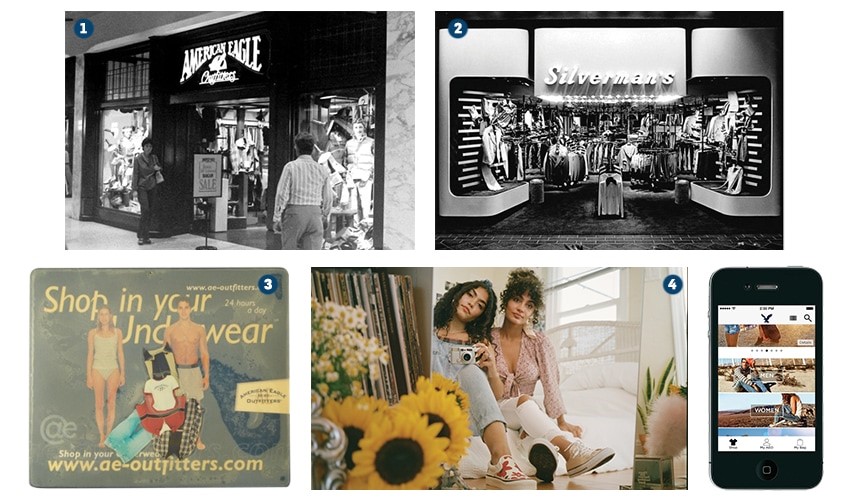
On Monday, American Eagle celebrated 25 years since its IPO by ringing the opening bell at the New York Stock Exchange. The company has been performing well over the past few years, particularly compared to some of its contemporaries, and its lingerie brand, Aerie, has been largely driving its growth.
“Across the lingerie market, everyone is shutting down stores, but Aerie is actually opening up a ton of new ones,” said Iskra Lawrence, a model who has worked closely with Aerie, starring in campaigns and also serving as a brand ambassador, making media appearances and also providing input on the brand’s messaging.
In the fourth quarter of last year, Aerie’s sales jumped by 23% year over year, while American Eagle, as a brand, grew by just 3%, a disparity many compared to the relationship between Gap and Old Navy. American Eagle’s CFO even admitted that a split similar to that of Gap and Old Navy could happen in the future.
While American Eagle is focused on reworking its existing stores by adding new components like a sneaker resale shop, Aerie has been focused on expanding its physical footprint. Last year, American Eagle said it planned to open between 50 and 80 new standalone Aerie stores in the U.S. by the end of 2019. Jennifer Foyle, the global brand president of Aerie, said she is also focused on continuing the brand’s growth through inclusive messaging and standout brick-and-mortar experiences.
“The messaging of inclusivity and sizing, it permeates through the walls,” Foyle said. “The fitting room is one of the best examples: There’s a curtain over the mirror when you come in. That tells you to feel good about yourself first and [decide] how you feel in the lingerie before you look at yourself.” She said there are also love notes in changing rooms featuring encouraging phrases. “Shoppers can add their own to remind others to love their body and feel good, and the messages get passed on,” she said.
Foyle said the company has implemented training programs at all levels of its stores, specifically focused on the same messaging featured across its marketing channels: an emphasis on personal empowerment over the ultra-sexy objectification of Victoria’s Secret-style lingerie marketing. None of Aerie’s models are retouched after they are photographed, and the company has featured women with various disabilities, in addition to women of all sizes.
Lawrence said all of Aerie’s messaging is meant to communicate that the lingerie is primarily meant for the wearer and not necessarily for the viewing pleasure of others, which has been the unspoken implication of lingerie brands for years. Of Victoria’s Secret, Foyle said only that she has much “respect for the competition.”
Aerie’s positioning puts it in line with a wave of underwear brands that have challenged Victoria’s Secret’s particular brand of marketing. Brands like ThirdLove and Les Girls Les Boys have helped swing women’s lingerie marketing away from sexy campaigns with impossibly beautiful women to something more relatable to the everyday consumer.
For Aerie’s future, Foyle said the brand is working on expanding significantly, but not too quickly. Aerie is currently only sold online and in brick-and-mortar locations in 17 states, but she plans to change that soon.
“Everyone keeps asking us to expand more and more, but we are not even across the country yet,” Foyle said. “Brick-and-mortar is important, but it’s especially so for lingerie. You absolutely need to have a strong online and offline presence for lingerie. Omnichannel — I hate that word — but you need to have it.”
WWD: AEO Marks 25 Years as a Public Company
American Eagle Outfitters turned 25 on Monday.
The retailer celebrated its quarter-century run on the public market by ringing the opening bell at the New York Stock Exchange the same day.
The party included Jay Schottenstein, executive chairman and chief executive officer of American Eagle Outfitters; Chad Kessler, global brand president of American Eagle; Jennifer Foyle, Aerie global brand president; Stacey McCormick, vice president of marketing at Aerie, and AerieReal role model Iskra Lawrence, as well as local retail associates from both brands, all of whom were outfitted in American Eagle jeans. Some were wearing matching denim jackets with a picture of the Stock Exchange printed on the back.
“We’re the fastest-growing retail bran d in the United States,” Schottenstein told WWD. “The secret is, number one, you have to give the customer real merchandise and real value, and you win on quality. Everything has to be right.”
Schottenstein said the goal two-and-a-half decades ago when the company went public, and he was still working alongside former chief creative director of American Eagle Roger Markfield, was to “own the denim” business and “put a pair of jeans on everyone’s behind.”
“And we’re achieving that,” Schottenstein said.
American Eagle Outfitters right now is the number-one retailer of ladies denim, according to the ceo. In the 15- to 25-year-old age range, the company is the number-one jeans company for men and women. In December, American Eagle surpassed $1 billion in sales during a single quarter. In all of 2018, the retailer sold more than $1 billion of its popular AE jeans. Last quarter, American Eagle marked its 16th consecutive quarter of positive comps growth. The stock, which closed up 2.45 percent to $21.78 a share on Monday, is up more than 2,700 percent since its initial public offering back in 1994. Schottenstein pointed out that’s a growth rate twice the size of the S&P 500.
And if the party on Wall Street Monday morning wasn’t enough, Monday night American Eagle will accept the American Apparel and Footwear Association’s Retailer of the Year award.
“Twenty-five years after going public, we’re really just beginning,” AEO’s Kessler said.
Schottenstein added, with so much competition, everything has to be right — from design to fit to fabrics. “At the end of the day, we have to do better than anybody else and keep evolving ourselves,” he said. “You have to be a good merchant to start with. You can have the best systems in the world, but if you’re not a good merchant, it’s not going to work.
“And the beauty of our business, we’re strong in brick-and-mortar [stores] and we’re strong online,” Schottenstein said. “You have to speak to the customer and all the channels have to have the same consistent message. You can’t have one message for online and one message for the store.”
And one thing American Eagle has that it didn’t have a quarter a century ago when it first listed on the Nasdaq is women’s apparel and intimates retailer Aerie.
During the most recent quarter, comps at the hugely popular women’s apparel brand rose 23 percent — on top of a 34 percent increase last year. The company also recently revealed plans to open between 60 and 75 Aerie stores in 2019.
“I think a lot of brands today get a little bit over assorted,” said Foyle of Aerie. “They’re trying to do too many things. We talk about staying in our lane and just completely staying focused on our offerings.”
Foyle said she doesn’t even mind smaller brands trying to capitalize off the Aerie brand message of body positivity and inclusiveness.
“There are a lot of copycats and people following us,” she said. “We think that’s the best compliment. There’s lot of market share out there for us to grab.”
Lawrence, one of the original AerieReal role models, added that among all Aerie employees — from retail associates to c-suite executives — there is a sense of pride belonging to the Aerie family; everyone stands behind the brand’s message.
“Which is something I rarely see in retail,” the model said. “The great thing about Aerie is that we evolve with the customer. We are so in tuned with the customer and we’re constantly listening that we’ll be able to evolve with the customer. We’re constantly on the ground and we make a really important point of actually going out there and actually meeting people.”
In fact, the success of Aerie has been so pronounced and so rapid that it’s left some wondering if the brand will spin-off into its own company.
But Schottenstein said Aerie will only spin off only if there’s a good reason for it.
“Just because everyone else is doing it, doesn’t mean we have to do it,” he said. “But if something makes sense and it’s better for both companies, [then] we are studying the best options. But it’s just too premature to talk about it [now].”
AEO Rings NYSE Opening Bell
Executive Chairman of the Board and Chief Executive Officer, Jay Schottenstein proudly rang the Opening Bell of the New York Stock Exchange surrounded by the leadership team and associates.
The ceremony celebrated the 25th Anniversary of AEO’s initial public offering (IPO) on April 13, 1994 as well as being named Retailer of the Year by the American Apparel and Footwear Association (AAFA).
WWD: Retailer of the Year
Jay Schottenstein, executive chairman and chief executive officer of American Eagle Outfitters Inc., has something of a novel perspective on retail.
He is one of the few retailers who remembers what it was like to win when brick-and-mortar was a red-hot commodity and has also managed to win as a specialty retailer in the age of e-commerce.
The company just logged its 16th straight quarter of comparable sales gains, with double-digit increases from its Aerie concept throughout.
Those numbers stand out today — just American Eagle is recognized as the American Apparel and Footwear Association’s Retailer of the Year. But for Schottenstein, who has been chairman of the retailer throughout its 25 years as a public company and was also ceo for the first decade of that, this is at least the second-turn of the wheel.
“In the mid-Nineties, the retailers were the darlings of Wall Street,” Schottenstein told WWD. “Every month when the sales would come out, it was like an index to the U.S. economy.”
In the age of Amazon and complaints about foot traffic in stores, that seems like a long time ago indeed.
But Schottenstein said there’s still hope and American Eagle’s performance is certainly bearing that out after a long, tough stretch for the industry in general.

“The [retailers] that survived could still be darlings,” he said, noting American Eagle hasn’t simply thrived, but evolved to meet the changing times.
“Back in the Nineties, you didn’t have the high-tech people, you didn’t have the Amazons,” he said. “A lot of stuff didn’t exist. One challenge we had is we had to become high tech also. We’ve devoted a lot of resources to our various technologies. We had to have a super online site.
“It’s a continual cycle,” he said. “No matter where we are now, we know we have to keep on moving because technology keeps on moving, we have to be up on top [of it] all the time.
“The big challenge is, ‘How do you speak to your customer and how do you attract new customers, too?’ With all the technology, you’d think it’d be easy, but it is very hard because [customers] have so many more choices and so many more influences that you have to figure out how to be able to speak to them.”
And American Eagle has clearly been able to pick up a new dialect.
“We pride ourselves in the quality of our product,” Schottenstein said. “I’ve seen influencers, social people, carry a Louis Vuitton handbag, Valentino shoes and they can be wearing American Eagle denim and be wearing a Chanel top — our denim fits with it.”
To understand it all, American Eagle uses its analytics department to study social channels — a key outlet for its young customer base — and Schottenstein said the company is constantly challenging itself to look at and approach the market in new ways.
The company’s red-hot teen concept Aerie is something of a beacon in this regard.
“Everyone uses the word authentic,” Schottenstein said. “Aerie is authentic. They don’t have to use the word, they really are authentic. We were the first to not airbrush our models. The theme of Aerie is to make the woman feel good about herself, she should feel good in her own skin, not somebody else’s skin. They’ve been a very democratic, very open company.”
Aerie’s success and attitude has also informed the approach at the American Eagle chain and the company overall.
“People who do business with you, they want to know they’re dealing with a responsible company, a company that stands for something,” the ceo said.
The retail industry, stores and consumers themselves will no doubt keep changing and it is ultimately Schottenstein’s responsibility to make sure American Eagle keeps up.
And the mall very much remains in the mix.
“The challenge, whether you’re a mall retailer or whether you’re a regular retailer is you have to give certain experiences to the customer,” he said. “There are always going be malls — it may not be as many malls — but you’re going to have several hundred malls in this country, and even the online retailers are putting stores in the malls.”
But Schottenstein is careful to point out that keeping the balance right and keeping the company moving in the right direction is a team sport.
“The award’s to the company,” Schottenstein said, referring to the nod from the AAFA. “I have the honor of being the ceo of the company. The award winner is American Eagle.”
AEO’s Commitment to Building and Fire Safety in Bangladesh
American Eagle Outfitters, Inc. (AEO) is committed to protecting the health and safety of all workers, including those who manufacture our clothing. In that spirit, AEO joined 220 global apparel companies in signing the 2013 Bangladesh Accord on Fire and Building Safety—an unprecedented independent, legally binding agreement to build a safe and healthy ready-made garment industry in Bangladesh in the aftermath of the Rana Plaza tragedy. This is also why we signed the Transitional Accord in 2018 to continue building the foundation for success over the long-term.
The Accord has contributed to substantial progress on strengthening building health and safety in Bangladesh. The goal now is to transition these activities to the Bangladeshi government, which is ultimately responsible for building safety. AEO and other members are working closely with the Accord as efforts are started to build local capacity with the government to facilitate a timely and effective handover once Accord operations, including factory inspections, safety trainings and a worker hotline, are fully functional. We look forward to seeing the success of the eventual transfer to a fully resourced government authority that will continue the progress made to date.
Forbes: American Eagle Put Its Best Foot Forward With Gen Z, Unveiling A Sneaker Resale Shop
Starting Saturday, sneakerheads in New York will have a surprising new place to buy kicks and streetwear: an American Eagle Outfitters store in Manhattan’s SoHo neighborhood.
Yes, American Eagle.
The teen retailer known for its jeans—and its growing Aerie lingerie brand, which has stolen share from Victoria’s Secret’s Pink label—has partnered with trendy Las Vegas sneaker consignment shop Urban Necessities for Urban’s first shop outside Sin City. The 1,900-square-foot in-store pop-up shop—carrying items that include Supreme streetwear and a pair of 2016 Nike self-lacing sneakers reselling for $50,000—will take up about a third of American Eagle’s first-floor space and stay open for a year, the first such long-term commitment for the retailer.
And it’s not just a lease partnership; American Eagle has taken a stake in Urban Necessities to help fund its growth, Chad Kessler, global brand president for the retailer’s flagship brand, said in an interview.
“Sneakers are about self-expression,” Kessler told me. “Our brand is built on individual style. We are about self-expression. We have the second-largest (U.S.) jeans business (after Walmart). Jeans and sneakers are great pairs. … Urban Necessities has a loyal following and is able to get the most exciting sneakers out there.” While one store likely won’t make any dent for a company with 1,000-plus locations, Kessler said he hopes to eventually open Urban Necessities inside some other American Eagle stores to “make sure it’s scalable.”
“My goal is for this to be an ongoing long-term partnership,” he said.
The partnership is another arrow in American Eagle’s quiver as it tries to win over today’s Gen Z shoppers. About a month ago, the company introduced its AE Style Drop rental service, which allows subscribers to rent three items at a time for $49.95 a month. Kessler said that the retailer has seen a “great response” and that the initial sign-ups have topped company expectations.
“There’s a new way customers are shopping,” he said. “It’s resale and rental. We are eager to try something with this new commerce.”
On the marketing front, as part of its #AEXME marketing campaign for this spring, American Eagle gave its cast of real Gen Z consumers total creative control in directing, styling and shooting selfies in real-life environments. And the company’s namesake brand, about 80% of its business, hasn’t retouched images of customers the past two years, Kessler said, taking a page from its sister brand Aerie, known for its successful #AerieReal campaign. Gen Z shoppers, which represent about half of American Eagle’s 15-to-25-year-old target customer base, “really want to put their money where their value is,” even more so than millennial consumers, Kessler said. “They celebrate diversity and inclusion. The brand is all about self-expression and individuality. We are trying to make youth empowerment.”
To meet that demand, the company has made its New York Union Square store a test lab for different ideas, including washers for students to do their laundry for free and a lounge area. Shoppers buying jeans can also have them customized for free, and a fitting room app allows them to interact with employees outside. While the company hasn’t found as much “engagement” with the free laundry feature and has no plans to expand it elsewhere, both the customization initiative and the fitting room app have been rolled out to some other stores, Kessler said.
Gen Z consumers “actually have a preference to shop at a physical location” compared with millennials, Kessler said. “They do even more research and pre-shopping on their device and online. The majority of Gen Z shoppers are looking for in-store experience. They want to interact with us.”
These and other efforts have paid dividends. American Eagle is second only to Nike among teenagers’ favorite clothing labels, according to a 2018 Piper Jaffray study, which surveyed 8,600 teens across 48 U.S. states, with an average age of 16.
Why is this crucial? Different studies have pointed to the rising importance of Gen Z, which Piper Jaffray said contributes about $830 billion to U.S. retail sales annually. American Eagle’s success has also made the company an outperformer in the fashion industry, which in recent days received the news that once-hot denim brand Diesel was filing for bankruptcy protection. Calvin Klein, meanwhile, said it had decided to shut its luxury collection business.
American Eagle “remains the bright outlier,” Wedbush analysts said in a report Thursday.
At a time when many clothing retailers like Victoria’s Secret and the Gap brand are using profit-eroding discounts to clear unsold merchandise, American Eagle late Wednesday reported comparable sales in the fiscal fourth quarter that ended February 2 rose 6%, its 16th straight increase. That included a 3% increase from its eponymous brand, which last year saw jeans sales top $1 billion for the first time to represent a third of the brand total, Kessler said, adding that its jeans business has gained market share. The smaller and fast-growing Aerie brand also continued to gain on Victoria’s Secret. Aerie comparable sales surged 23%, the 17th straight quarter of double-digit increases.
While profit has been partly dented by American Eagle’s increased spending on marketing, in-store payroll, wages and distribution expenses, the company actually lifted demand through more regular-priced sales as it offered fewer promotions and “lowered markdowns,” in sharp contrast to the deep discounts many of its mall rivals gave away during the holiday quarter.
Capitalizing on its U.S. momentum, the company is expanding internationally and recently announced a plan to open its first licensed store in Europe.
With studies showing Gen Z consumers worldwide being more similar in their behaviors and attitudes than other generations, American Eagle cracking the code on teens in the U.S. should make it easier for the company to replicate its success overseas.
AEO Reports Record Fourth Quarter and Annual Revenue
Fourth Quarter EPS of $0.43; Annual EPS of $1.47 +30%
Fourth Quarter Comparable Sales Rose 6%, Marking 16 Straight Quarters of Positive Comp Growth
American Eagle Fourth Quarter Comps Rose 3%, Aerie Increased 23%
PITTSBURGH — (BUSINESS WIRE) – American Eagle Outfitters, Inc. (NYSE: AEO) today reported EPS of $0.43 for the 13 weeks ended February 2, 2019. This compares to $0.52 for the 14 weeks ended February 3, 2018, which included the benefit of an extra week of sales due to the retail calendar. Adjusted EPS of $0.44 last year excluded $0.08 of tax benefit discussed below. No adjustments were recorded in Q4 of fiscal 2018.
For the 52 weeks ended February 2, 2019, the company reported EPS of $1.47. This compares to $1.13 for the 53 weeks ended February 3, 2018, which included the benefit of an extra week of sales due to the retail calendar. Adjusted EPS of $1.48 excludes $0.01 of restructuring charges and compares to adjusted EPS of $1.16 last year, which excluded $0.08 of tax benefit related to the U.S. tax legislation as discussed below and $0.11 of restructuring and related charges. The EPS figures refer to diluted earnings per share.
“Strong execution by the teams drove a record fourth quarter and fiscal 2018, as we reached a milestone of $4 billion in annual revenue with increased operating profit,” commented Jay Schottenstein, AEO’s Chairman and Chief Executive Officer. “American Eagle and Aerie continued to deliver consistent performance by combining product innovation and great merchandise with an improved customer experience across channels. As we head into 2019, we will continue to leverage the strength of our brands, selling channels and the team’s commitment to continually raising the bar for our customers. I’m extremely proud of our results over the past several years. The strength of our balance sheet and free cash flow enables us to make important investments in our business to fuel market share gains, future growth and returns to our shareholders.”
Adjusted amounts represent Non-GAAP results, as described in the accompanying GAAP to Non-GAAP reconciliations.
Fourth Quarter 2018 Results
- Total net revenue for the 13 weeks ended February 2, 2019 increased $15 million, or 1% to $1.24 billion compared to $1.23 billion for the 14 weeks ended February 3, 2018. Total revenue was adversely affected by approximately $60 million of lost revenue due to operating one less week in 2018, which is consistent with the retail calendar. Consolidated comparable sales increased 6% over the comparable period ending February 3, 2018, following an 8% increase last year. This marked the 16th consecutive quarter of positive comparable sales.
- By brand, American Eagle comparable sales increased 3%, building on a 5% increase last year. Aerie’s comparable sales increased 23%, following a 34% increase last year, marking the 17th consecutive quarter of double-digit comp growth.
- Gross profit increased $5 million or 1% to $431 million from gross profit of $425 million last year. The gross margin rate was flat at a rate of 34.6%. Lower markdowns were offset by higher distribution and compensation expense.
- Selling, general and administrative expense of $288 million increased 9% from $264 million last year. As a rate to revenue, SG&A rose 160 basis points to 23.1%. The dollar increase primarily supported key investments in our brands, the customer experience and our associates with increases in store payroll, higher wages and incentives, and incremental advertising expense.
- Depreciation and amortization expense decreased 5% to $41 million, improving 30 basis points to 3.3% as a rate to revenue.
- Operating income of $101 million compared to $116 million last year. As a rate to revenue, operating income decreased to 8.2% from 9.4% last year. One less week in the fourth quarter adversely affected operating income by approximately $18 million.
- Other income of $2.3 million consisted primarily of interest income.
- The effective tax rate of 26.5% compared to 21.7% (34.2% on an adjusted basis) last year.
- EPS of $0.43 compared to EPS of $0.52 last year, or adjusted EPS of $0.44, which included $0.08 of tax benefits last year related to U.S. tax legislation enacted in December 2017.
Fiscal Year 2018 Results
- Total net revenue for the 52 weeks ended February 2, 2019, increased $240 million, or 6% to a record $4.0 billion compared to $3.8 billion for the 53 weeks ended February 3, 2018. Total revenue was adversely affected by approximately $40 million of lost revenue due to operating one less week in 2018, which is consistent with the retail calendar.
- Consolidated comparable sales increased 8% over the comparable period ending February 3, 2018, following a 4% increase last year.
- By brand, American Eagle comparable sales increased 5%, building on a 2% increase last year. Aerie’s comparable sales increased 29%, following a 27% increase in 2017.
- Gross profit increased $117 million, or 8% to $1.5 billion. The gross margin rate increased 80 basis points to 36.9% of revenue compared to 36.1% last year. An improved markdown rate and rent leverage were partially offset by increased delivery costs due to a strong digital business and higher compensation.
- Selling, general and administrative expense of $981 million increased 11% from $880 million last year. As a rate to revenue, SG&A rose 110 basis points to 24.3%. The dollar increase primarily supported key investments in the customer experience and our associates with increases in store payroll, higher wages and incentives, and incremental advertising expense.
- Depreciation and amortization expense increased slightly to $168 million to $167 million last year, improving 20 basis points to 4.2% as a rate to revenue.
- Operating income of $337 million increased from $303 million last year. Adjusted operating income of $339 million increased 4% from $325 million last year. As a rate to revenue, adjusted operating income decreased to 8.4% from 8.6%. Adjusted figures exclude restructuring and related charges of approximately $2 million and $22 million in fiscal 2018 and 2017, respectively. One less week in the year adversely affected operating profit by approximately $12 million.
- The effective tax rate decreased to 24.1% compared to 28.9% (34.4% on an adjusted basis) last year.
- EPS of $1.47 compared to EPS of $1.13 last year. Adjusted EPS of $1.48 excludes $0.01 of restructuring charges and increased 28% compared to adjusted EPS of $1.16 last year, which excluded $0.08 of tax benefit related to the U.S. tax legislation and $0.11 of restructuring and related charges.
Inventory
Total ending inventory at cost increased 7% to $424 million, consistent with our expectations.
Capital Expenditures
In 2018 capital expenditures totaled $189 million. For fiscal 2019, the company expects capital expenditures to be in the range of $200 to $215 million, with more than half related to store remodeling projects and new openings, and the balance to support the digital business, omni-channel tools and general corporate maintenance.
Shareholder Returns, Cash and Investments
During 2018, the company returned $242 million to shareholders through cash dividends and share repurchases. We paid dividends of $97 million and repurchased 7.3 million shares for $144 million. The company ended the year with total cash and short-term investments of $425 million, an increase of $12 million compared to the end of 2017.
Store Information
We ended the year with a total of 1,055 stores. During the year, the company opened 16 AE stores and closed 15, ending the year with 934 AE stores. Included in the AE store count are 147 Aerie side-by-side
locations, of which 29 opened in 2018. Additionally, the company opened 12 Aerie stand alone stores and closed 6, ending the year with 115 Aerie stand alone locations and 262 total Aerie stores. . Internationally, the company ended the year with 231 licensed stores. For additional information, see accompanying table.
Income Taxes
U.S. tax legislation was enacted on December 22, 2017, referred to as the Tax Cuts and Jobs Act (the “Tax Act”). The legislation contained several key tax provisions and, as required, the company included reasonable estimates of the income tax effects of the changes in tax law in its fourth quarter and fiscal 2017 financial results. As a result, the company realized $0.08 per share of tax benefit, which is excluded from adjusted results. Specifically, these one-time items relate to:
- Benefit from a lower blended U.S. corporate tax rate in fiscal 2017.
- A net benefit from the re-measurement of deferred tax balances and the one-time transition tax on undistributed earnings of foreign subsidiaries.
- A benefit from the acceleration of certain deductions into fiscal 2017.
During the fourth quarter of 2018, the company finalized its accounting for the one-time mandatory transition tax on undistributed foreign earnings and the re-measuring of deferred tax balances due to the Tax Act in accordance within the one-year measurement period allowed by the SEC.
First Quarter 2019 Outlook
Based on an anticipated comparable sales increase in the low single digits, management expects first quarter 2019 EPS to be approximately $0.19 to $0.21. This guidance excludes potential asset impairment and restructuring charges. Last year’s first quarter reported EPS of $0.22 included $0.01 of restructuring charges. Excluding these items last year’s adjusted EPS was $0.23. See the accompanying table for the GAAP to Non-GAAP reconciliation.
Conference Call and Supplemental Financial Information
Today, management will host a conference call and real time webcast at 4:00 p.m. Eastern Time. To listen to the call, dial 1-877-407-0789 or internationally dial 1-201-689-8562 or go to http://www.aeo-inc.com to access the webcast and audio replay. Additionally, a financial results presentation is posted on the company’s website.
Non-GAAP Measures
This press release includes information on non-GAAP financial measures (“non-GAAP” or “adjusted”), including earnings per share information and the consolidated results of operations excluding non-GAAP items. These financial measures are not based on any standardized methodology prescribed by U.S. generally accepted accounting principles (“GAAP”) and are not necessarily comparable to similar measures presented by other companies. Management believes that this non-GAAP information is useful for an alternate presentation of the company’s performance, when reviewed in conjunction with the company’s GAAP financial statements. These amounts are not determined in accordance with GAAP and therefore, should not be used exclusively in evaluating the company’s business and operations.
* * * *
About American Eagle Outfitters, Inc.
American Eagle Outfitters, Inc. (NYSE: AEO) is a leading global specialty retailer offering high-quality, on-trend clothing, accessories and personal care products at affordable prices under its American Eagle® and Aerie® brands. The company operates more than 1,000 stores in the United States, Canada, Mexico, China and Hong Kong, and ships to 81 countries worldwide through its websites. American Eagle Outfitters and Aerie merchandise also is available at more than 200 international locations operated by licensees in 24 countries. For more information, please visit http://www.aeo-inc.com.
SAFE HARBOR STATEMENT UNDER THE PRIVATE SECURITIES LITIGATION REFORM ACT OF 1995
This release and related statements by management contain forward-looking statements (as such term is defined in the Private Securities Litigation Reform Act of 1995), which represent our expectations or beliefs concerning future events, including first quarter 2019 results. All forward-looking statements made by the company involve material risks and uncertainties and are subject to change based on many important factors, some of which may be beyond the company’s control. Words such as “estimate,” “project,” “plan,” “believe,” “expect,” “anticipate,” “intend,” “potential,” and similar expressions may identify forward-looking statements. Except as may be required by applicable law, we undertake no obligation to publicly update or revise any forward-looking statements whether as a result of new information, future events or otherwise and even if experience or future changes make it clear that any projected results expressed or implied therein will not be realized. The following factors, in addition to the risks disclosed in Item 1A., Risk Factors, of the company’s Annual Report on Form 10-K for the fiscal year ended February 2, 2019 and in any subsequently-filed Quarterly Reports on Form 10-Q filed with the Securities and Exchange Commission in some cases have affected, and in the future could affect, the company’s financial performance and could cause actual results for the first quarter 2019 and beyond to differ materially from those expressed or implied in any of the forward-looking statements included in this release or otherwise made by management: the risk that the company’s operating, financial and capital plans may not be achieved; our inability to anticipate customer demand and changing fashion trends and to manage our inventory commensurately; seasonality of our business; our inability to achieve planned store financial performance; our inability to react to raw material cost, labor and energy cost increases; our inability to gain market share in the face of declining shopping center traffic; our inability to respond to changes in e-commerce and leverage omni-channel demands; our inability to expand internationally; difficulty with our international merchandise sourcing strategies; challenges with information technology systems, including safeguarding against security breaches; and changes in global economic and financial conditions, and the resulting impact on consumer confidence and consumer spending, as well as other changes in consumer discretionary spending habits, which could have a material adverse effect on our business, results of operations and liquidity.